

Market Insights · · 7 minute read
August 2026 market update
Dayton housing market, August 2026: a $272,000 median price, faster sales, softer list-to-sale ratios, and what a revival in Troy says.
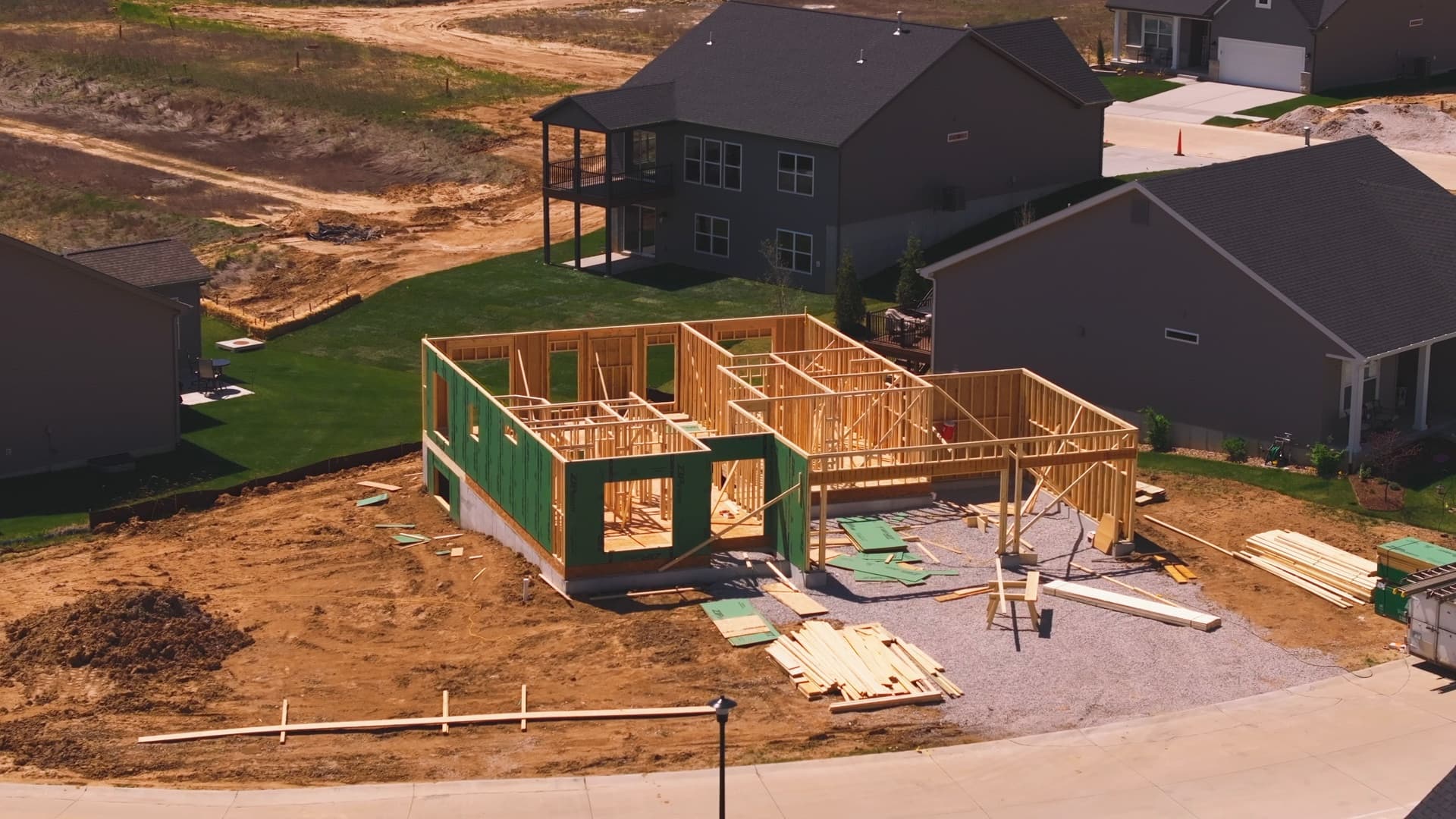
If you've seen the national headlines lately, you've probably heard some version of this: the housing market is splitting in two. Luxury buyers are still spending. Everyone else is stuck. Economists have started calling it a "K-shaped" market, and the data backs it up. Zillow reported that starter-home sales fell 5.4% in May even though there were 4.5% more of them to choose from, while sales of homes worth $1.9 million or more climbed 6.2%. Meanwhile the national median price for an existing home hit an all-time high of $440,600 in June, according to the National Association of Realtors.
Dayton isn't playing that game. This piece pulls back from the month-to-month numbers to look at the bigger picture, what July tells us about where this market is headed, and why a small city like Troy is doing more to explain that story than any single statistic can.
The headline: we're not the national story
Our median sale price in July was $272,000 across the whole market, a little more than half the national median. When people talk about housing affordability being broken in this country, they're usually not talking about Dayton. They're talking about markets where a starter home costs more than our median resale.
That gap matters more than it used to, because the forces reshaping the national market right now, rising insurance costs, property taxes, and mortgage rates hovering near 6.7%, hit hardest in places where prices were already stretched thin. Here, they're a headwind. Somewhere else, they're closer to a wall.
The July numbers, with some context
A few numbers from July are worth sitting with for a second longer than a headline allows.
Homes sold jumped from 1,588 in June to 1,689 in July, a bigger one-month move than you'd expect from typical seasonal drift. At the same time, new listings pulled back from June's 2,221 to 2,094. Put those two together and you get a market that's absorbing inventory faster than it's replacing it, even while total active inventory keeps climbing (3,072 homes for sale, up from 2,979 in June and 2,908 a year ago).
That combination of more sales, fewer new listings, and more standing inventory isn't contradictory. It just means the extra supply we've been building over the last year is finally getting real traction with buyers, even as the pace of new sellers coming to market cools off from its summer peak.
The number that surprised me most was the list-to-sale ratio. Sellers are still getting close to asking, 98.8% on average, but that's down from 99.4% in June and 99.0% a year ago. It's a small shift, less than a percentage point, but it's the clearest sign in the entire dataset that buyers are starting to claw back a little negotiating room. Months of supply held flat at 2.2, exactly where it sat in July of last year, which tells me this isn't a market swinging toward buyers or sellers so much as one settling into a new normal.
The undercurrents: what's shaping this market
A few stories broke locally this summer that don't show up in a monthly stats table but explain a lot about where things are headed.
The Dayton-Kettering-Beavercreek metro ranked third in the country for foreclosure share of listings, at 6%, trailing only Lake Charles, Louisiana and Tuscaloosa, Alabama (Dayton Business Journal). That's worth understanding: pandemic-era foreclosure protections have fully expired, and property taxes here rose 3.6% between 2024 and 2025, faster than inflation. It's a reminder that "affordable" doesn't automatically mean "free of stress," especially for owners who bought or refinanced when rates were higher than they expected to hold.
On the builder side, Dayton's new-construction homes carry a median price of $301,851, the 8th-lowest of any metro in the country, according to Clever Real Estate's analysis of Zillow data (Dayton Business Journal). But we're also building less of it, proportionally, than almost anywhere else. Only 5% of homes sold here last year were new construction, compared to 15% nationally. Builders point to land costs, code compliance, and rising materials prices, shingles alone are up roughly 25% due to global supply disruptions, as the reason. Huber Heights is absorbing a lot of that pressure with a genuine housing boom underway, including 1,400 planned homes in Carriage Trails alone.
In a smaller but telling data point, Dayton has the lowest share of homeowners paying HOA or condo fees of any major Ohio metro, just 16%, compared to 30% in Columbus and 24% in Cincinnati (Dayton Business Journal). It's a small thing, but it's part of the same pattern: fewer hidden costs stacked on top of an already lower price tag.
Layer in the federal picture and it gets more interesting. The 21st Century ROAD to Housing Act became law in July, aimed at increasing national housing supply and restricting large institutional investors from buying up single-family homes (NAR). Locally, Harrison Township got ahead of that shift on its own, approving a full rewrite of its zoning code in mid-July to open the door for "missing middle" housing, duplexes, triplexes, townhomes, and accessory dwelling units, in a state where 69% of the housing stock is still single-family detached. It is the same national supply conversation playing out at the township level, months before most residents will notice.
Troy: what growth looks like on the ground
All of that is easier to see in a place like Troy than it is in a spreadsheet.
On August 23rd and 24th, Fulton Farms hosts its Sweet Corn Festival, a family-run tradition going back to 1954 that pulls in food trucks, live music, and a car show that's grown to well over a hundred entries most years (Fulton Farms). It's the kind of event that doesn't move a housing statistic.
The more consequential story is happening a few blocks away on South Market Street, where a building called Mayo's Hall, dating to 1854 and once home to Troy's first opera house, just sold for $400,000. Developers are turning the ground floor into retail and office space and the upper two floors into nine new residential condos. The building's first tenant, a dirty soda shop called Downtown Fizz, opened its doors in July.
Nine units isn't a headline number. But it's the same story we just went through at the macro level, more supply tucked into places that already have the infrastructure and demand to support it, playing out one historic building at a time. If you want to understand where Dayton-region housing is headed, Troy's downtown is as good a place to look as any market report.
What this means if you're buying or selling
If you're selling, you still have real leverage: homes are moving in about a month, and you're within a point of full asking price. But that edge is softening month over month, not year over year, which means pricing strategy matters more right now than it did back in the spring.
If you're buying, the story is encouraging. Inventory is building, sales are still closing quickly for sellers who price correctly, and compared to almost anywhere else in the country, you're not fighting national-level affordability math. Rates are still elevated compared to a few years ago, but they're not the story here that they are in markets where the median home costs $440,000.
Want the full month-over-month and year-over-year breakdown, metric by metric? Watch the video above. And if you're thinking about buying or selling anywhere in the Dayton region, I'd love to help. Reach out anytime.
Sources and further reading
- Dayton ranks among top metros in the U.S. for foreclosures (Dayton Business Journal)
- Dayton housing: new builds cheaper but scarce vs. national trend (Dayton Business Journal)
- HOA fees are eating Dayton homeowner equity (Dayton Business Journal)
- Harrison Township, Dayton, revamps zoning to attract missing middle (Dayton Business Journal)
- Historic Mayo's Hall building in Troy preps for redevelopment (Dayton Business Journal)
- New dirty soda shops in the Dayton area, Troy (Dayton Business Journal)
- Fulton Farms Events
- Housing's K-shaped economy lifts luxury, stalls starter-home sales (CNBC)
- What the 21st Century ROAD to Housing Act Means for States, Localities and Housing Supply (NAR)
- Mortgage Rates Average 6.69% (Freddie Mac)